By the time a problem in a living system is visible, the cheap moment to fix it has usually passed. The damage began earlier, mostly in a way that is hard to see, let alone measure.
We forecast that hidden state, and work out the best move you can actually make. Early enough to change the outcome.
This happens more often than you would expect. Kiwifruit that looks perfect at packing rots in transit to market. Dairy cows get facial eczema from paddocks that look healthy. Varroa turns up in hives outside the eradication zone.
And knowing is only half of it. Living systems are in motion, and there is never one simple answer. You cannot cool every cow, all day, every day. You cannot send one wellboat to eleven salmon sites at once. Every real decision runs into something: a budget, a boat, a spray window, a crew, a rule you have to comply with.
We estimate the part no sensor reports. What is going to happen.
The timely intervention that does the most good within your real constraints: time, money, people, rules.
Customised to your ways of operating, with the value proven before you roll anything out.
Most operations already measure something. A temperature-humidity index, a map of infected hives, a water sample, a rate of product returns. A number on its own lacks context. Sensors report the existing state, which tends to lag the damage.
Forecasted optimisation informs complex decisions to intervene before the damage and loss is recorded, before the cost gets locked.
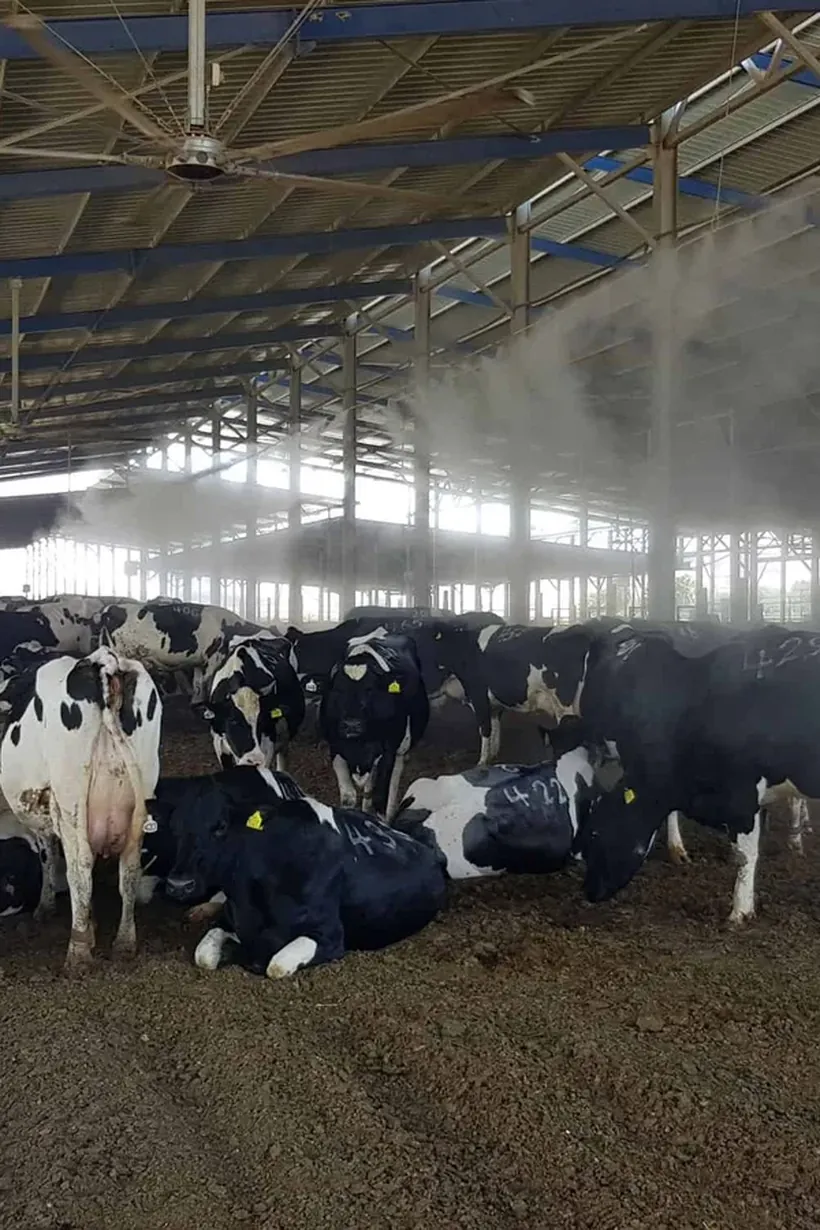
In hot, humid places a housed herd sits above the heat-stress line for much of the year. Long before a cow looks unwell she is eating less, holding heat overnight and losing both milk and the chance of getting back in calf. Nothing on the shed board says so, and the herd average hides which cows it is happening to.
A toxin builds on the pasture and damages the liver quietly. By the time an animal shows the skin lesions that give the disease its name, it has been losing production for weeks and the liver damage does not heal. Most affected animals never show a mark at all.
Two blocks a few kilometres apart get the same forecast and only one of them is hurt. The difference is not the weather, it is how far along the buds are and how much cold they can take tonight. That state is not in the forecast, and there are never enough frost machines, sprays or crew hours to cover every block.
Toxin gathers near a raw-water intake hours to days before a routine sample is taken, sent away and reported. The plant is treating water it has not yet measured, so the reading that finally arrives describes water that has already gone into supply.
A biological performs in the trial, then works on one paddock and not the next. The reason is usually the conditions it landed in: soil, moisture, temperature, what grew there before. None of that is known at the point of sale. The failure gets blamed on the product.
Drift, contamination and potency loss develop inside the run, but the assay that confirms them reports once the batch is finished. The trace on the screen looks normal while the outcome is already decided, and by the time it moves there is nothing left to decide.
Land · Gulf, North Africa and hot-climate dairy · Heat
The milk survives the summer.The next lactation does not.
Twenty-two thousand cows in a barn in the desert, at thirty-five litres a day. The cooling works. There are two things it does not reach, and one of them decides next year.
Land · Australian pollination · Varroa
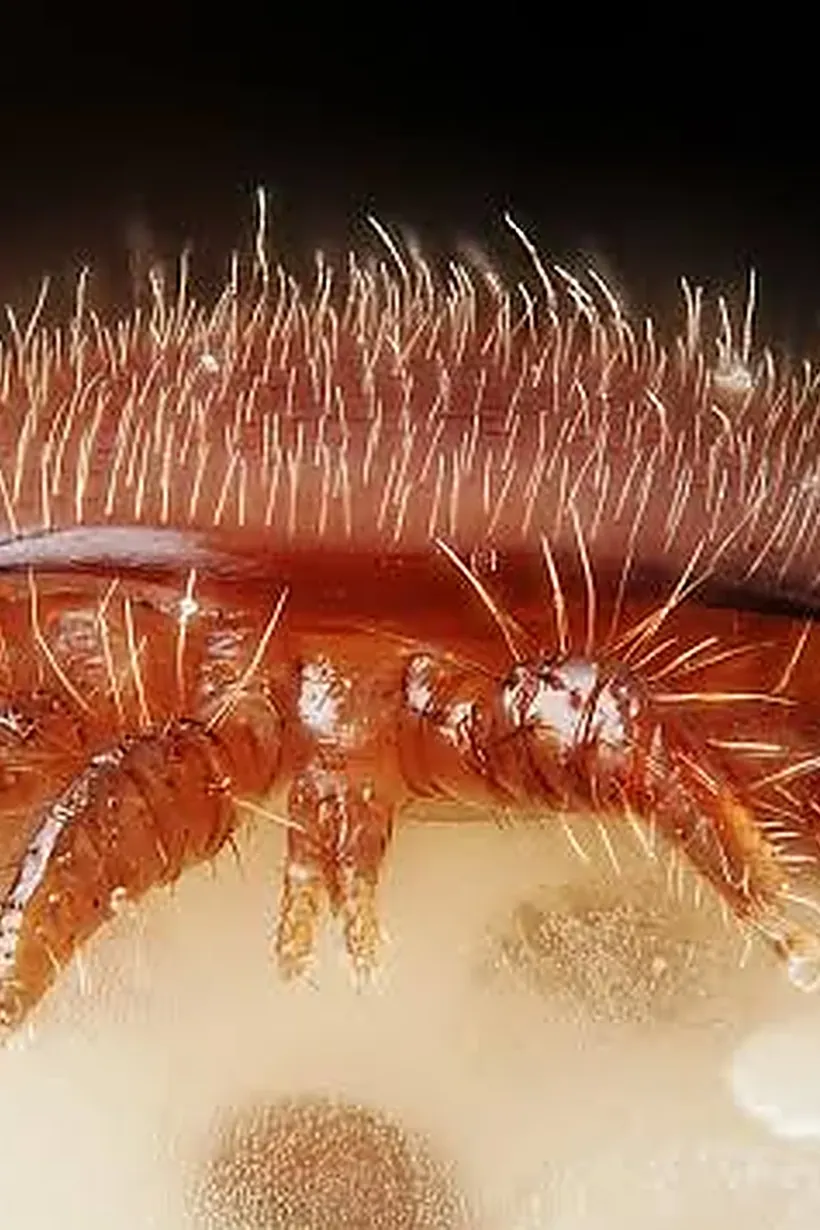
It was found in one port in 2022.It is now in four states.
Eradication was declared no longer achievable in September 2023, fifteen months after the first detection. Resistance to both main chemical families has since been confirmed in all four states.
Sea · Western & Central Pacific · Tuna allocation
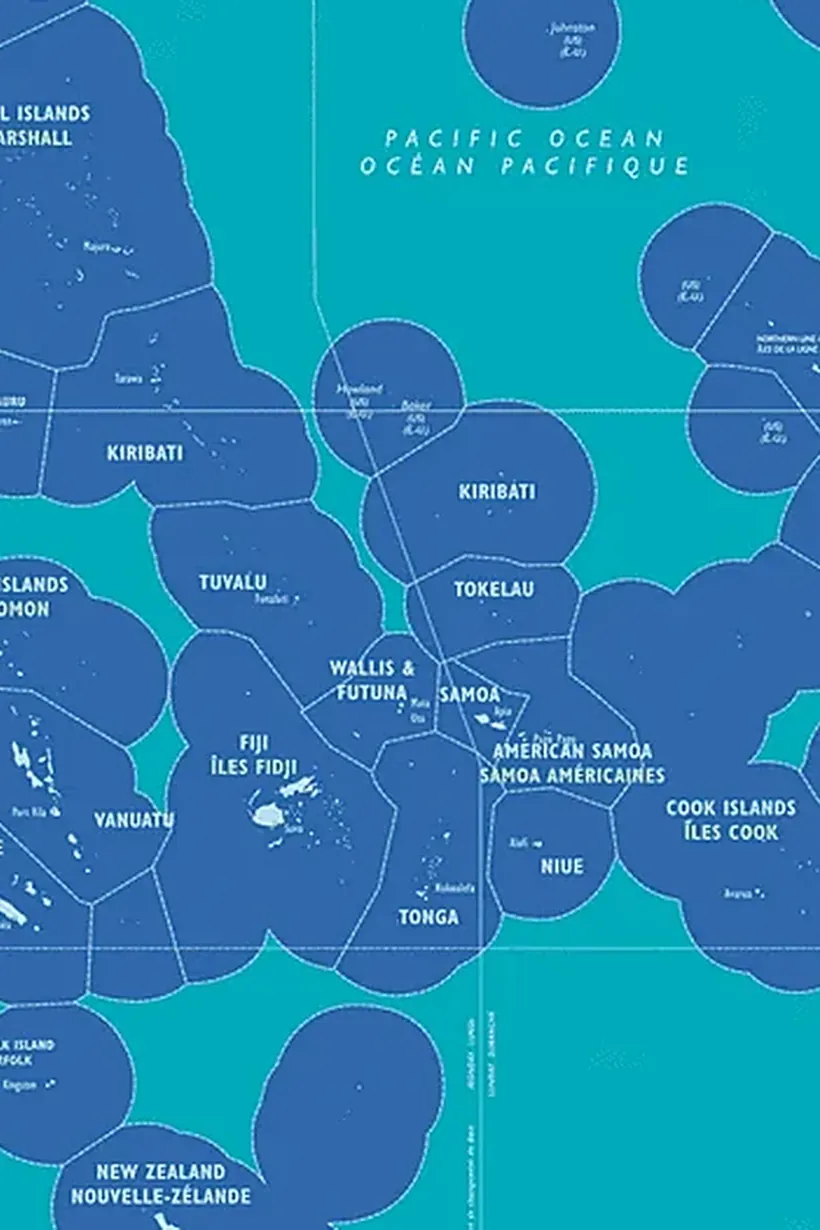
The rule has to be written now.The fish move later.
The Commission has committed to agree a high-seas allocation framework in 2027, for a stock whose distribution is projected to keep shifting for the rest of the century. The framework has to still be defensible on the days the projection turns out to be wrong.
Land · New Zealand kiwifruit · Post-harvest
In November, more than one in five failed.In May, they all looked the same.
Zespri told its growers in July that claims on fruit sold from November 2025 reached 22 percent. The decision that produced those claims was made months earlier, on a packline, against fruit that looked perfect.
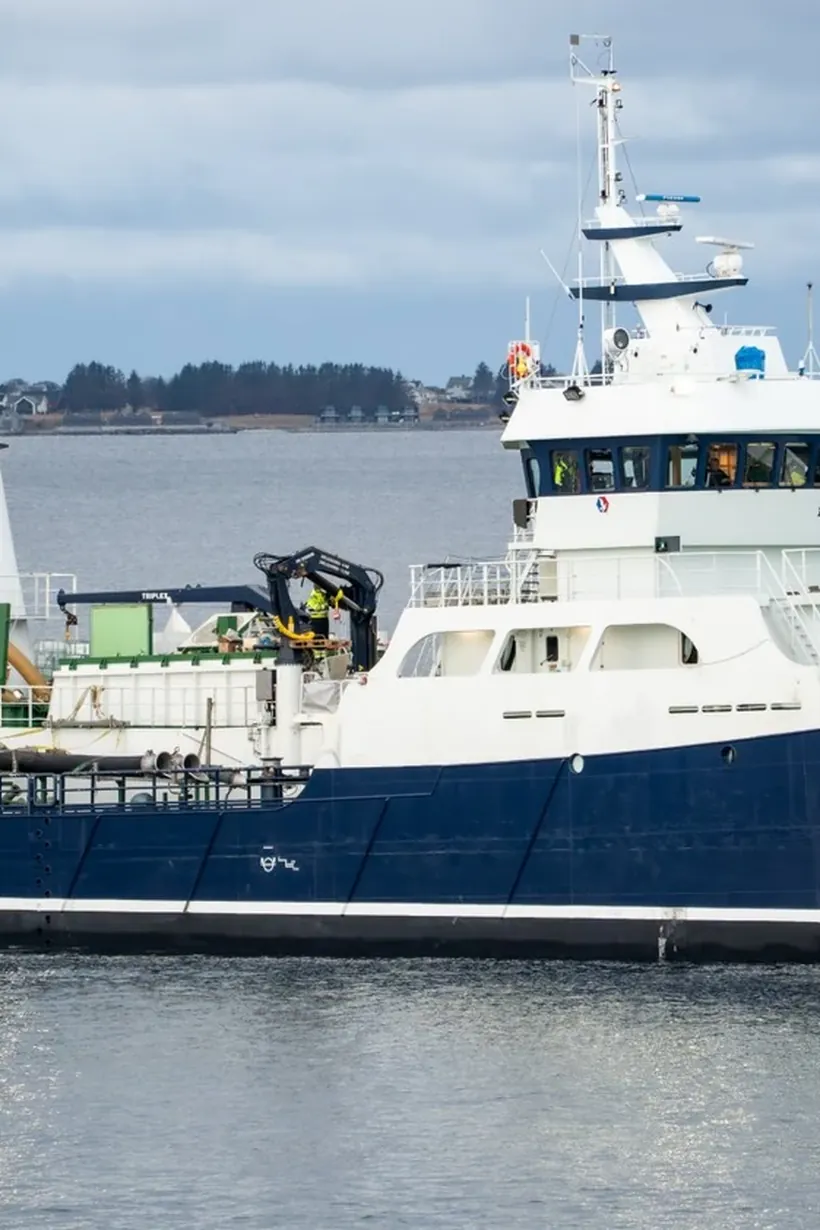
Sea · New Zealand salmon
One wellboat.Eleven sites. One summer.
New Zealand’s first wellboat arrived in April and was working by late May. It costs about $8.9 million a year and it can be in one place at a time. Which place, and when, is now a decision somebody has to make every week of the warm months.
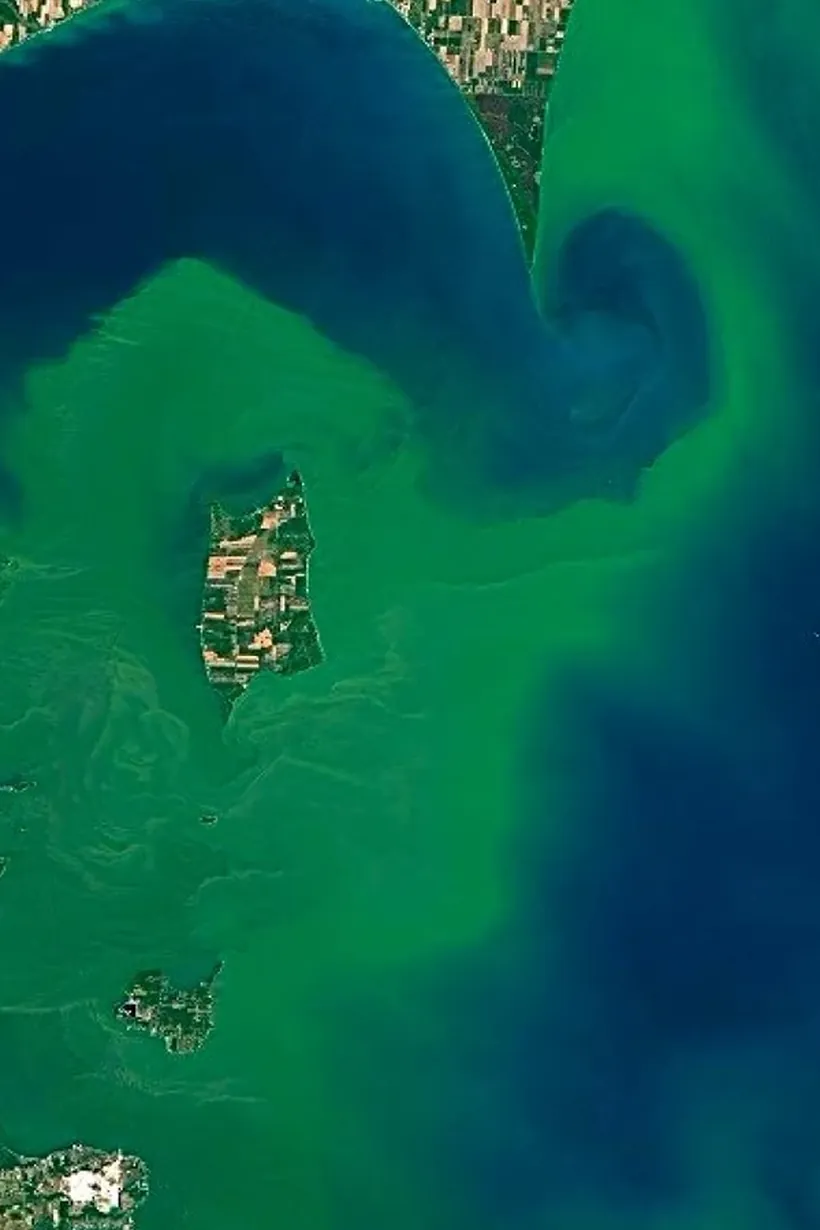
Water · Drinking-water intakes · Cyanotoxins
The sample is clean.The water is not.
A bloom moves hundreds of metres an hour and changes ninety-three fold in a day. The rule says test it once a fortnight, and allows five days for the answer.

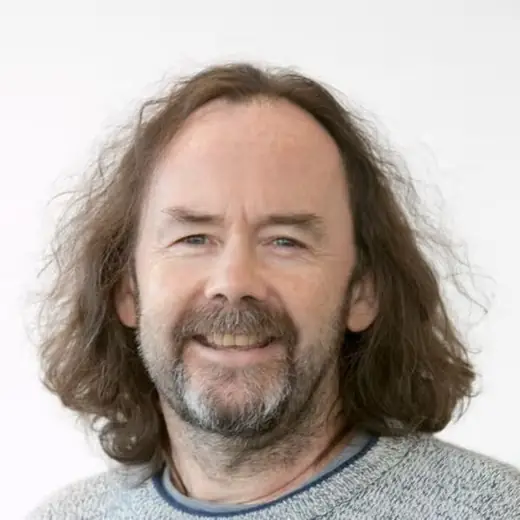
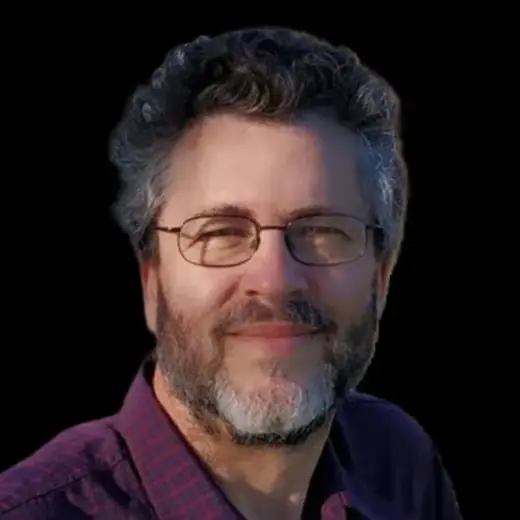
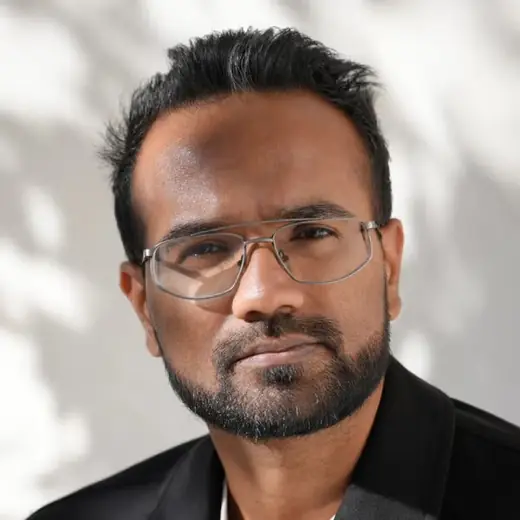
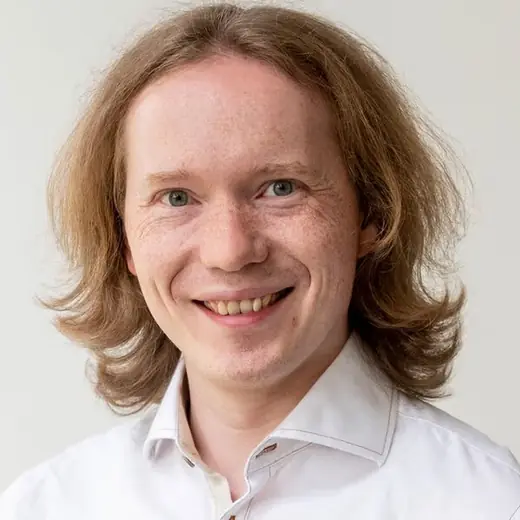
Five scientists, five separate fields: probabilistic and hierarchical forecasting, constraint optimisation, Bayesian uncertainty, graph and multimodal AI, and sequential decision-making under hard constraints.


Your pilot calibrates our model against your living system, rerunning data from past seasons and testing core decisions. It validates the model’s value and makes sure it works for your teams before you ask them to operate it.
Three seasons of records, five is better. What you measured, what you did about it, and what happened. The last two matter most; without them there is nothing to score. We read the sensors and platforms you already run rather than replacing them. And some hours with your people. Your experts, and whoever makes the call in the field.
A one-page back-test. How much earlier, what it was worth in your units, what it saved, and whether the odds held up. Plus a loss model fitted to your operation, including the losses that never reach a gauge. On a first engagement that is the part that matters most.
A fixed fee, quoted after the scoping call and before you commit to anything. Not time and materials. Where a licence follows, it is priced against what the system is measured to deliver — after it has been measured, not before.
Your records, your measurements, and the results we produce from them. We own the model. What accumulates on our side is the mathematics: the architecture, the calibration, the machinery.
Scoping is free. Questions, before any data moves. It ends in a short written scope: the data, the question, the fee, the timeline.
The calibration is a fixed quote, agreed before it starts, with a stop-gate inside it. This is the part that fits the model to your operation — your units, your constraints, your records. If the data cannot answer the question, work stops there and you pay for that part only.
After that it is a licence covering support, upgrades and maintenance of a running system.
We are not licensing mathematics. Most of the components our people built are open source, and we would rather you checked them. What we build and maintain is the working system: the pipeline assembled for your problem, the model fitted to your operation, the calibration machinery, the optimiser configured for your constraints, drift monitoring as conditions move, retraining as evidence accumulates, and somebody accountable when it misbehaves.
We’re not claiming a cow is a fish. But from a maths perspective there’s a shape that repeats.
A lot of units - cows, shoals, hives, fruit, paddocks. Each affected by something that cannot be measured yet, but can be predicted through signals you already hold. A damage threshold, the point of no return, that keeps moving. A loss that can be measured: lost milk, reduced conception, dead fish, destroyed fruit, lost revenue, the higher cost of intervening late. And never enough time or money to treat everything, or to stop it happening at all.
The model question goes beyond forecasting, to how many different answers your system is capable of producing.
Relying on sensors can produce a rule with two states, or answers. Act. Or don’t.
Think about an ordinary smoke alarm. It has two actions - sound an alarm, or stay silent. Smoke is smoke.
But smoke is not just smoke. A smoke alarm cannot predict that you are about to burn the pine nuts, and it cannot tell that “you’ve burnt the pine nuts again, turn the extractor fan on and open this window,” versus “the wiring in the wall has gone up, get everyone out of the house.”
An upset (D) arrives carrying many states: sixty-four here, thousands in a real herd. Whatever you use to decide (R) answers with the states it has, and the outcome is the difference between the two. It lands somewhere in Z, every outcome that could happen, and G is the part of Z you can live with. Watch the outcomes gather into G as R gains states. Then watch what happens the moment it loses them again: nothing, at first.
W. Ross Ashby, An Introduction to Cybernetics, §11/7, p.207. Chapman & Hall, London, 1956.
R. C. Conant & W. R. Ashby, “Every good regulator of a system must be a model of that system”, Int. J. Systems Sci. 1(2):89–97, 1970.
One model, fitted to your issue. What is specific to you is the fit: your data, your constraints, your options.
If you own the decision and wear the cost when it goes wrong, we can help.
Whether an instrument covers a hazard is not a question about how good the instrument is. It is whether it looks at the right thing, often enough, before the thing that decides the loss has already happened.
Ohio and Oregon both require a raw-water cyanotoxin sample once a fortnight, and allow the lab five days to return a number. The lake keeps no such timetable: a probe in a plant intake recorded a 93-fold change within 24 hours, and a rise from 0.6 to 55.8 units in four. The morning grab samples, in the authors’ words, were unlikely ever to measure the afternoon peaks.
The decision that matters is taken before any number exists, and one way of getting it wrong is irreversible. Ohio’s guidance is blunt: do not chlorinate ahead of filtration, because any dose is expected to lyse the cells. Do it through a bloom and you convert a removable problem into one no barrier removes.
The whole decision, worked down →
28 tonnes What a fortnight of carbon at 40 mg/L costs a 50 ML/day plant. Ohio recommends holding it. New Zealand does not require it, and no NZ supplier publishes how fast it can arrive.The container’s own controller logs supply and return air every hour for the whole voyage, with two years of memory. Temperature is measured, and measured well. There is no gap for a thermal excursion to hide in.
Ethylene is not on that list. The controller does not log it, and neither do the container-monitoring product lines we checked, nor the controlled-atmosphere units that scrub ethylene out, which run on oxygen and carbon dioxide sensors. We have not surveyed every tracker sold. What we did check is not watching, for two to four weeks, and the fruit does not un-ripen.
The whole decision, worked down →
NZ$379m Cost of quality in 2025, our sum of Zespri’s six published pool rows. It has ranged from $176m to $539m in four seasons, and SunGold rose $104m in the year Green fell $25m.Every figure in both columns is drawn from a named primary source, and what is not verified is listed as not verified. Sources and notes
The more of these signs your problem shows, the more likely there is loss here worth going after.
This is production machinery, not a design on paper. We work from the data you already collect. Forecast and optimisation run as a closed loop, each improving the other, and every call gets scored against what actually happened, so the model sharpens on your system season after season.
First we estimate today's hidden state: the infection, the heat load, the mite population. Unobserved, not unknowable. Then we project it forward. Probabilistic, uncertainty-aware forecasting built for the data you've actually got, reconciled up and down your hierarchy.
Constraint programming turns the forecast into the optimal move under your real limits: crew, cooling, product, wellboat days. It re-solves as the event unfolds and decides under uncertainty rather than waiting for it to resolve. Plainly: who gets treated, when you can only reach some of them. This is also what absorbs a bad season. A forecast made in spring cannot know what kind of year it is; being able to re-solve in autumn does not need to.
Calibrated odds and the evidence behind them, never a bare number. You approve, override or ignore, and every call is logged, so you can defend it to a vet, a board or an auditor.
Every industry we work in has decades of good science behind it. Almost none of it is wasted. But a particular kind of finding has nowhere to go, and that is where we work.
Research produces two kinds of answer. One generalises into a rule: cure the fruit for forty-eight hours, keep the canopy open, do not pick below this dry matter, treat every cow at dry-off. Rules are cheap, teachable and auditable, and industries adopt them completely. They work.
The other kind says it depends — on this one, today. That has no institutional home. You cannot write it into a standard, train a workforce on it, or audit compliance with it, because the answer is different every time. So it stays in the journals, however good it is.
And here is the part that is easy to miss. Every rule an industry adopts removes the share of the loss that responds to a uniform fix. What remains is, by construction, the part that does not.
So the proportion of the remaining loss that needs a per-unit answer rises every time an industry succeeds — even as the total falls. A hospital that eliminates infection through handwashing and sterile technique has made an enormous, real gain, applied to everyone. What is left is the patients who react badly for reasons of their own. No further amount of handwashing reaches them. You have to tell them apart.
That residue is our work, and it is the same shape in every sector: the decision that cannot be standardised, made repeatedly, on units that differ from each other more than the average admits.
We will not claim to understand your biology, chemistry or agronomy better than you and your research partners do. In any established industry there is an institute or a university group who have spent decades on it and know things we will not learn in a month. On the science we expect to be learning from them.
What we bring is the mathematics — probabilistic forecasting of hidden states, and constrained optimisation of what to do about them. And we hold that claim to a real bar: not better at maths than your scientists, which would be easy and worthless, but better at forecasting and optimisation than the data scientists, modellers and analysts already working in your sector. Before we say it, we go and find out who those people are and what they have already tried.
If the quantitative work in a sector is already strong and the problem is genuinely hard, that is not an opportunity. We will say so and walk.
Not every problem that looks like ours is one. This is the test we run before we take a case on, and it is the reason some of them do not survive it.
Estimate at the finest unit where signal-to-noise supports estimation. Then check that a decision is actually made at that unit. If the two do not coincide, you have a research project or a feature, not a product.
Averages are where information goes to die. A national fruit-loss curve applied to every tray. A herd average standing in for one animal. A composite sample that dilutes one bad quarter into three good ones. In each case the pooled number is perfectly accurate and completely useless, because nothing is average.
But the answer is not simply to go finer. Below some unit the signal stops existing — destroyed by dilution, by low prevalence, or by sampling too sparse for the process being sampled. And the direction only runs one way: you can always aggregate up, and you can never come back down. A herd-level answer tells you nothing about which animal, and retreating up the hierarchy to find signal usually means abandoning the decision you set out to serve. When that happens we say so.
So the test has two halves and both must pass. Is there signal at this unit? And is a decision genuinely made at this unit? Where they coincide, a forecast changes something. Where they do not, you are either doing science or building a feature. Both are honourable. Neither is a product, and we would rather find that out in a back-test than in a deployment.
Ross Ashby put it more elegantly in 1956: every good regulator of a system must be a model of that system. The regulator has to match the variety of what it regulates — no coarser, and no finer.
Our team co-wrote the Predict+Optimize benchmark that governs forecasting to make decisions under hard constraints. That is the shape of every problem on this page.
Hierarchical: forecasts that reconcile across cow, mob, farm and region so the numbers add up at every level. Probabilistic: a full predictive distribution, not a point estimate.
Constraint-aware recommendations that respect crew, capacity, quota, withholding periods and budget. Re-solved as conditions move, not fixed at the start of the season.
Agentic AI for pulling in context from the signals you already have. Human-in-the-loop throughout: you approve, you override, and every call is on the record.
Each scientist's full publication record is on their Google Scholar, linked in the team section above.
When something does go wrong, the focus lands on the decisions taken in the months before it, on what was foreseen, and whether those decisions were made with care.
In a world influenced and increasingly operated by AI, there is no settled answer to the requisite standard of care. In July 2026 the UK Jurisdiction Taskforce published the most authoritative English statement on liability for harms caused by AI. On what a professional actually has to do to meet the standard, it says the fact-specific nature of the test
renders it impossible to state definitively in this Legal Statement what a professional has to do (or avoid doing) in order to comply with the standard of care.
UK Jurisdiction Taskforce, Legal Statement on Liability for AI Harms under the private law of England and Wales, July 2026That gap is closing. Professional bodies and standards organisations are writing the practice now, and the same Statement expects courts to treat their guidance as a useful yardstick.
If you use any AI in connection with a living system, this opinion is worth giving to your legal team.